
The creation, deployment, and maintenance of large-scale software is an intrinsically complex process, subject to market volatility, technological evolution, and requirement uncertainty. Given this complexity, adopting a clear development framework is not merely an organizational guideline but a strategic imperative for consistently managing resources, time, and budget. The Software Development Lifecycle (SDLC) is what systematically describes how to build software that meets quality standards and security requirements.
A software development methodology works through formal frameworks designed to structure, plan, and control the entire process of creating an information system. It provides a clear roadmap that guides the team through the various phases of the lifecycle, from the initial requirements gathering to final delivery and maintenance. For technology service companies, following a methodology is crucial to ensuring consistency and predictability in project outcomes.
In this context, the Agile Methodology realigns the concept of a lifecycle, focusing the structure not on sequential rigidity but on the cadence of value delivery and the ability to adapt to the dynamic market changes that translate into requirements and business rules, changes that often occur before the final delivery of the project in order to secure competitive advantage.
The Mindset of Continuous Value Delivery
Agile Methodology represents a mindset shift in software development, defined primarily by its values and principles. At YasNiTech, by using the methodology, we aim to value documentation that is not exhaustive but complete enough for developers to have a solid foundation to deliver effectiveness, reliability, security, and maintainability in our solutions. And of course, we value individuals and interactions, working software, continuous collaboration with the customer, and the ability to respond quickly to change.
The principle that “working software is the primary measure of progress” underlines transparency and the focus on tangible value. This is especially relevant in complex environments, where the work is centered on the components and tasks that make a difference for the customer, accelerating deliveries and increasing team productivity.
A central technical point that differentiates Agile from other methodologies is its combination of iterative and incremental approaches.
- Incremental Approach: Focuses on delivering subsets or functional components of the product in slices. The product is built progressively.
- Iterative Approach: Focuses on developing the product through successive refinement. The product (or part of it) is reviewed and improved in each cycle based on customer feedback.
The synergy between Iteration and Increment is what gives Agile its resilience. While the incremental nature ensures the delivery of value in slices, the iterative nature ensures the continuous adaptation of that value. This combination allows teams to adapt to constantly changing requirements and deliver value in short, predictable cycles. This adaptability does not compromise structure—rather, it ensures that the best architectures and requirements emerge from self-organizing teams.
The Structured Lifecycle of Agile (SDLC)
Contrary to the idea that Agile lacks structure, frameworks such as Scrum (the most popular among agile methods) formalize the software development lifecycle (SDLC) through short and repeatable cycles known as Sprints. This cycle is defined by rigorous phases of inspection and adaptation.
1. Conception and Preparation Phase
The cycle begins with the definition of a product vision and the creation of the Product Backlog (PB). The PB is the single, prioritized list of everything known to be needed for the product. Managing this backlog and continuously prioritizing it (known as Product Backlog Refinement) ensures that the items most important to the customer are always ready, detailed, and estimated before construction begins.
2. Iteration Planning Phase (Sprint Planning)
In this phase, the Scrum team meets and selects the highest-priority items from the Product Backlog that can be completed within a specific Sprint (a fixed period, usually 2 weeks). These selected tasks form the Sprint Backlog. Sprint planning is a crucial control point, as the team commits to a set of deliverables, ensuring that cost and time for that cycle are fixed.
3. Execution and Construction Phase (Development)
During development, the focus is on completing the tasks in the Sprint Backlog within the defined timebox. Transparency and alignment are maintained through the Daily Scrum (a daily 15-minute meeting), where the team inspects progress toward the Sprint Goal and coordinates efforts for the day. Daily inspection minimizes risk, enabling teams to identify and mitigate problems much earlier in the lifecycle than in sequential models.
4. Testing and Validation Phase
The culmination of execution is the completion of the Increment’s tasks/activities, delivering a potentially usable, tested, and validated module. Internal validation is governed by the Definition of Done (DoD). The DoD is a rigorous quality checklist that establishes a shared understanding of what “complete” means. It typically includes the completion of all acceptance criteria, security/performance testing, and code reviews. The DoD acts as a mandatory quality control, ensuring that the delivered product is consistent and meets organizational standards.
5. Increment Review Phase (Sprint Review)
At the end of the Sprint, the Sprint Review takes place, an external inspection event. The Scrum team demonstrates the completed Increment to stakeholders (customers and managers). This is the formal moment for gathering feedback. Active customer participation allows the team to understand expectations and enables the Product Owner (PO) to adapt the Product Backlog in real time.
6. Deployment Phase
Once the Increment has been inspected and validated during the Sprint Review and strictly meets the Definition of Done (DoD), it is ready for Deployment. This phase involves moving the functional software to a production or staging environment, making it potentially usable for end users or the client, even if the full release does not occur yet. Deployment is supported by continuous automation inherent in modern DevOps practices, ensuring that code is delivered quickly and safely.
7. Maintenance and Continuous Refinement Phase
The cycle concludes with the Sprint Retrospective, an internal inspection event. The Scrum team reflects on the recently completed Sprint (processes, interactions, tools). The goal is to identify patterns and trends and adjust behavior to become more effective in the next iteration. This phase is the engine of continuous improvement and operational efficiency.
8. Launch Phase
After the internal process of inspection during the Retrospective, the development team and the Product Owner determine the ideal moment for release. This phase represents the strategic decision point where the software, already deployed and reviewed, is formally delivered for general use by end users and the market. The goal is to maximize business value by introducing new functionality at the most opportune time, completing the value delivery cycle.
Agile vs. Traditional and Hybrid Models
The choice of methodology must always be contextualized, based on factors such as requirement stability, project complexity, and tolerance for uncertainty. Different methodologies offer different techniques for managing and mitigating risks.
The Waterfall Model
The Waterfall model is a linear and sequential project management practice. It requires that phases (analysis, design, construction, testing) be completed in strict order, without returning to previous stages.
- Where It Is Suitable:
Waterfall is most suitable for smaller, well-defined projects where requirements are clear, fixed, and fully known before development begins. It is valuable in environments that demand strict upfront planning and documentation, such as certain regulatory or government projects.
- Where It Does Not Fit:
It is unsuitable for projects with volatile requirements, high complexity, or situations where the client does not have a complete understanding of what they want. Any late discovery of changes or errors requires restarting phases, resulting in significant costs and delays, since there is no room for change mid-process.
The Incremental Model
The Incremental Model, often confused with Agile, focuses strictly on delivering functional subsets or components of the product in slices. While it improves upon Waterfall by enabling earlier value delivery, it lacks the iterative nature that defines Agile.
- Where It Is Suitable:
It is useful when the product can be naturally divided into independent modules and when early delivery of functionality is highly desirable.
- Limitations:
Without the formal iterative mechanism of collecting feedback and refining (as seen in Agile), increments delivered may be technically functional but fail to align with optimal user satisfaction or evolving market expectations.
Decision Factor | Waterfall | Incremental | Agile |
Requirement Stability | High (Must be 100% known) | Defined, but divisible | Low to Medium (Volatile or emerging) |
Tolerance for Change | Low (High rework cost) | Medium (Accepts changes between increments) | High (Responds to changes continuously) |
Delivery Frequency | Single (Delivery at the end) | Multiple (Functional subsets) | Frequent and continuous (Every Sprint) |
Risk Management | Planned and centralized | Managed per segment | Continuous and adaptive (Fail Fast) |
Project Complexity | Low to Medium (Well-defined) | Medium | High and complex |
Demystifying the Lack of Control in Agile
A common criticism of Agile Methodology is that its flexibility and acceptance of scope changes imply a lack of governance or project control. However, this perception is mistaken. Agile governance does not eliminate control, it repositions it. Instead of exerting rigid control over the initial scope (which quickly becomes obsolete in complex projects), Agile applies rigorous control over quality, time, and value prioritization.
The Structure of Adaptive Governance
Agile governance is intrinsically based on the principles of Inspection and Adaptation. Control is exercised through artifacts, events, and roles that promote transparency and formal feedback.
The fear of scope creep is mitigated by the Product Backlog (PB). The PB encompasses all tasks, functionalities, and user stories. The Product Owner (PO) is solely responsible for managing and prioritizing this backlog. This ensures that decision-making about what is built is centralized and focused on maximizing Return on Investment (ROI). Any new information or requirement change must be incorporated and prioritized within the backlog, competing with existing items, which prevents uncontrolled scope expansion without impact analysis.
The Definition of Done (DoD) as a Quality Firewall
The most powerful mechanism to guarantee technical control and organizational discipline in Agile is the Definition of Done (DoD).
The DoD is a mandatory and shared understanding of what it means for a Product Backlog item to be considered complete. It goes beyond merely functional code, requiring that essential quality and compliance criteria be met, such as:
- All acceptance criteria have been fulfilled.
- All necessary tests (including regression and performance tests) have been successfully completed.
- Relevant documentation has been created and reviewed.
- Code review has been performed.
The DoD acts as the organization’s quality firewall. If an item does not meet all the DoD requirements, it cannot be released and must return to the Product Backlog. This prevents the pressure for speed (a characteristic of Agile) from leading to the accumulation of technical debt and ensures that technical and organizational standards are upheld, granting high reliability to the delivered Increment.
Agile as a Long-Term Framework and Strategic Partner
Agile Methodology proves to be an SDLC model that not only accepts change but incorporates it into its fundamental structure. Its architecture is based on short cycles of inspection and adaptation, ensuring a repeatable and structured process essential for the consistent creation of high-quality software.
For YasNiTech, adopting Agile represents becoming a strategic partner. The model facilitates customer expectation management and continuous collaboration, enabling low-risk experimentation and measurability across different product ideas.
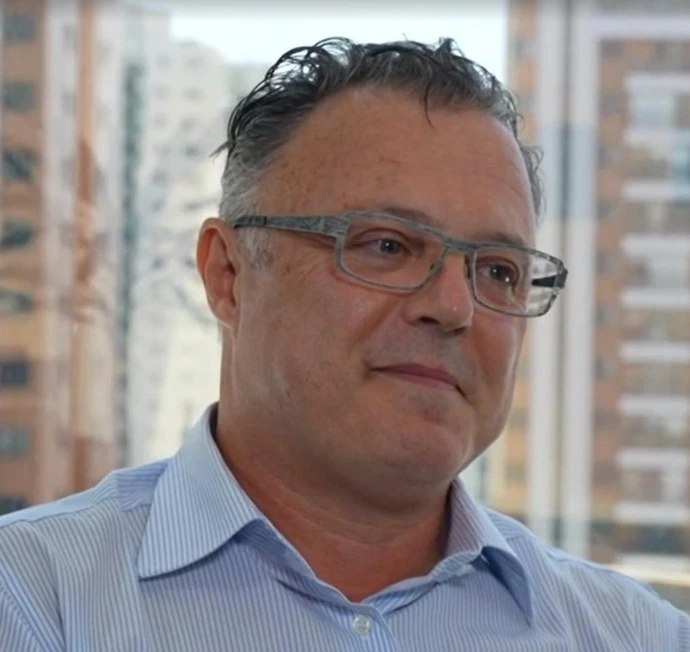
"At YasNiTech, combining Agile Methodology with our experience in developing mission-critical solutions is what ensures our efficiency. Today, having a rigid plan can kill a company’s competitiveness and lead to obsolescence in most sectors. Agile gives us resilience: in each short cycle, we are 100% focused on what generates real value for the customer, and the customer is there, giving constant feedback. This isn’t a lack of control; it’s the smartest way to ensure we’re building the right solution, not just any solution, avoiding waste, reducing risk, and helping our clients achieve their goals."
Agile demystifies the notion of lack of control by shifting the focus of governance from static adherence to an initial plan to adaptive governance of quality (DoD), priority, and process. This self-correcting approach ensures that the software lifecycle is not only structured but complete, encompassing everything from conception to continuous refinement of both the product and the development process itself.
The Agile structure is, in essence, the structure of adaptation, preparing the project to evolve with the market and remain relevant throughout its entire lifecycle.
About YasNiTech
Founded in 2013 by former IBM professionals, YasNiTech is a global technology company with offices in São Paulo, Boston (USA), and Sansepolcro (Italy). Since its inception, it has quickly established itself in the Brazilian market by delivering innovative solutions in fraud detection, loss prevention, and business analytics.
Over the years, the company has expanded its portfolio, incorporating initiatives in Low-Code platforms, digitization, and process automation. Among its innovations, it introduced the first Multi-Enterprise Business Process Digitalization tool to the Brazilian market, boosting digital collaboration within the supply chain.
In its current phase, YasNiTech positions itself at the forefront of Artificial Intelligence, with a special focus on Agentic AI. The company develops intelligent and autonomous solutions that enhance decision-making, operational efficiency, and innovation across multiple sectors of the economy, such as healthcare, pharmaceuticals, logistics, and industry.